

Medically reviewed by dermatology specialists at Harley Street Prestige Medical, London.
Discovering genital warts can be an unsettling experience. It is natural to feel concerned, embarrassed, or unsure about what to do next. One of the most common questions patients ask is:
“Will genital warts go away on their own, or do they need treatment?”
The answer depends on several factors, including your immune response, the size and number of warts, and how long they have been present. While some genital warts may disappear naturally over time, others can persist, spread, or become more noticeable without treatment.
Understanding how genital warts behave and when professional treatment is recommended can help you make the best decision for your health and wellbeing.
What Are Genital Warts?
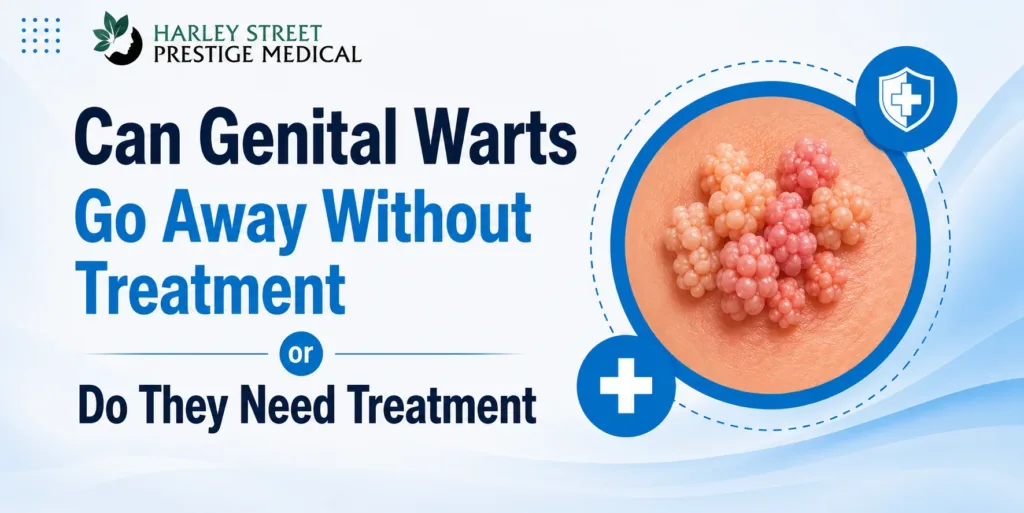
Genital warts are small growths that develop on or around the genital and anal area. They are caused by certain strains of the Human Papillomavirus (HPV), a common viral infection that spreads through skin-to-skin intimate contact. While genital warts are generally associated with low-risk HPV strains, they can still cause physical discomfort and emotional distress.
Can Genital Warts Go Away Without Treatment?
In some cases, yes.
The immune system may suppress the virus responsible for genital warts, causing visible lesions to gradually shrink and disappear. However, this process can take months or even years, and not all genital warts resolve without treatment.
However, there is no guaranteed timeline.
For some individuals, this process may take several months. For others, it can take years. In certain cases, the warts may not disappear at all without medical intervention.
There is no reliable way to predict which genital warts will resolve naturally and which will persist.
As a result, many patients choose treatment for genital warts rather than waiting indefinitely for spontaneous resolution.
Why Waiting May Not Always Be the Best Option
Although some genital warts can disappear naturally, adopting a “wait and see” approach is not always ideal.
1. Warts Can Increase in Size
Small lesions may gradually become larger over time. What begins as a barely noticeable bump can develop into a more extensive cluster of warts.
Larger lesions are often more difficult to manage and may require more intensive treatment for genital warts.
2. New Warts May Appear
Even if existing warts remain stable, additional lesions can develop nearby.
Many patients initially present with one or two warts and later discover multiple affected areas because treatment was delayed.
3. Physical Symptoms Can Develop
While some genital warts are painless, others may cause:
- Irritation
- Itching
- Tenderness
- Friction-related discomfort
These symptoms can become increasingly bothersome over time, particularly in areas exposed to moisture or frequent skin contact.
4. Emotional and Psychological Impact
The emotional effects of genital warts are often underestimated.
Many patients report:
- Reduced self-confidence
- Anxiety about intimate relationships
- Worry about appearance
- Concerns regarding future partners
Professional treatment for genital warts can often provide reassurance and help restore confidence much sooner than waiting for natural clearance.
How Do You Know If Treatment Is Needed?
A medical assessment is recommended if you notice:
- New growths in the genital area
- Warts increasing in size
- Multiple lesions appearing
- Persistent itching or irritation
- Changes in skin texture
- Lesions that have remained unchanged for several months
Even when symptoms are mild, an examination by an experienced dermatologist can help determine the most appropriate course of action.
Benefits of Treating Genital Warts Early
At Harley Street dermatology clinic, we frequently see patients who delay treatment in the hope that genital warts will disappear naturally. While this can happen in some cases, early assessment often provides greater clarity and peace of mind.
Seeking treatment for genital warts sooner rather than later offers several advantages.
Faster Clearance
Professional treatment removes visible lesions much more quickly than waiting for spontaneous resolution.
Many patients achieve an improvement within a short period following treatment.
Preventing Further Spread
Early treatment can reduce the likelihood of additional warts developing in nearby areas.
The sooner lesions are addressed, the easier they are often to manage.
Improved Comfort
Removing genital warts can relieve irritation, itching, and discomfort, particularly in areas prone to friction.
Greater Confidence
Many patients experience an improvement in confidence and emotional wellbeing after successful treatment.
Treatment Options for Genital Warts
At Harley Street Prestige Medical, our dermatologists use several clinically approved methods to remove genital warts safely and effectively.
1. Surgical Excision
Surgical excision is considered the most effective treatment for complete genital wart clearance. The wart is removed in a controlled clinical setting, typically in a single session, providing the highest likelihood of full removal.
2. Hyfrecation (Electrocautery Treatment)
Uses controlled electrical energy to remove genital warts. It is an effective option for multiple warts and may require two to three sessions for complete clearance.
3. Cryotherapy (Freezing Treatment)
Cryotherapy freezes wart tissue, causing it to gradually fall away. While often more affordable, multiple treatment sessions may be needed.
4. Medical / Topical Treatments
Prescription creams or solutions may be suitable for small or early-stage genital warts. These treatments work gradually and usually require consistent application over time.
Whether you require a simple topical approach or advanced genital wart removal treatment in London, an individual assessment can help determine the most effective option for your condition.
Why Choose Harley Street Prestige Medical?
When it comes to treatment for genital warts, choosing an experienced clinic can make a major difference to both your treatment experience and outcomes. At Harley Street Prestige Medical, our dermatology specialists provide expert, discreet, and patient-focused care in a professional clinical environment.
Patients choose Harley Street dermatology clinic because we offer:
- 12+ years of clinical experience
- Expert dermatological assessment and diagnosis
- Advanced genital wart removal treatments
- Surgical excision, hyfrecation, cryotherapy, and topical treatment options
- 30+ state-of-the-art facilities
- Comprehensive aftercare and ongoing patient support
- 1,000+ successful procedures performed
Our focus extends beyond simply removing visible genital warts. We are committed to helping patients achieve the best possible clinical outcomes while restoring confidence, comfort, and peace of mind through every stage of their treatment journey.
If you are looking for expert genital wart removal treatment in London, our team can provide personalised treatment plans designed around each patient’s needs.
Key Takeaways
- Some genital warts may disappear naturally over time.
- There is no reliable way to predict if or when they will go away.
- Untreated warts may persist, spread, or become more noticeable.
- Professional treatment offers faster and more predictable results.
- Early treatment can improve comfort, confidence, and overall quality of life.
- If you notice unusual growths or skin changes in the genital area, seeking advice from the specialists at Harley Street Prestige Medical can help ensure an accurate diagnosis.
- Early assessment and treatment can help achieve better outcomes and provide valuable peace of mind.
Frequently Asked Questions
1. Can genital warts disappear completely?
Yes. Some genital warts may disappear without treatment as the immune system suppresses the virus. However, this can take months or years and cannot be predicted.
2. Can genital warts come back after treatment?
Yes. Although treatment removes visible warts, HPV may remain in the skin, which means recurrence is possible.
3. Should I see a dermatologist for genital warts?
If you notice persistent growths, irritation, or uncertainty about a diagnosis, a dermatologist can assess the lesions and discuss appropriate treatment options.

